Photo by CHUTTERSNAP on Unsplash
https://ift.tt/Gt0E8Dj
http://localhost:4000/resources/2022/09/27/warning-service-oriented-architecture-and-domain-driven-design-arent-the-same-thing/
Photo by CHUTTERSNAP on Unsplash
This research aims to discover the project management and collaboration challenges facing businesses globally in the architecture, engineering and construction (AEC) industries. The report explores how businesses manage project information, where they store it and how they go about retrieving data to chase payments and when facing legal disputes. The report also provides insight into how the industry has bounced back following the Covid-19 pandemic which affected project management processes.
This year’s study surveyed 507 AEC leaders from businesses around the world, with the majority of respondents coming from the United Kingdom and the United States. All respondents hold leadership and management roles at their businesses, including CEOs, CFOS, CCOs, presidents, directors and owners, as well as BIM managers, project managers, heads of IT and IT managers. The anonymous responses were collected between January and April 2022.
The research clearly highlights that disputes are continuing to disrupt AEC businesses but less than half of respondents file important information to central locations, leaving information accessibility and visibility a major challenge. This is particularly poignant with good document management and records management being key to dispute resolution or litigation success.
Most respondents have experienced some form of dispute in the last 12 months, with a huge spike across the industry compared to this time last year. Unfortunately, it has become increasingly clear that despite this increase in disputes, AEC firms are not managing their information effectively to protect themselves in court.
“The working world has continued to change in the last 12 months, which is reflected in the AEC industry’s evolving priorities. This time last year, we saw a huge shift to remote working which saw an increased need for effective collaboration tools, however, this year it appears that hybrid working is the new normal in the industry,” said Stuart Rowe VP of collaboration strategy at Mail Manager, part of Ideagen.
“Our research has found that the majority of project correspondence remains in email inboxes, which means it is difficult for people to locate and retrieve project information when they need it. This is a huge concern as most project scope changes reside in email inboxes. Failing to properly manage all information and records also prevents a Golden Thread, or a Single Source of Truth, across projects and businesses.”
Email remains the most-used collaboration tool for project correspondence in the AEC. Four-fifths of respondents reported that the majority of their project correspondence is via email. Furthermore, only one-fifth of respondents use email for project correspondence less than 50% of the time.
When asked about their business’s reliance on email, only 28% of people surveyed say they are not more reliant on email than they were 12 months ago. Email is particularly important to project scope changes, with 47% of this information sitting in email and 43% residing within formal documents.
Most respondents (87%) are at least “slightly concerned” about their project information not being readily available and visible. Plus, over half of the survey respondents (57%) are either “concerned” or “very concerned” about not being able to discover project information. These concerns are highlighted by people increasingly needing to locate information from past projects. In fact, just over half of respondents (51%) said that they regularly need to find information from historic projects.
Less than half of respondents (44%) require employees to file all project-related emails into a central location, with 15% of respondents indicating that no emails are filed across the business. This opens firms up to huge risks relating to information management. As well as this, one in three businesses do not require their staff to file their emails when people leave the business, so this information is lost.
In 2021, almost two-thirds of our respondents (63%) reported experiencing some kind of dispute in the business. This year, that number rose to 78% of respondents experiencing a dispute. Only 22% of respondents have not been involved in a dispute in the past 12 months. Project scope changes (24%), payment issues (22%) and timelines (20%) were the leading causes.
One thing has become clear from the research: our new hybrid working world has had a significant impact on how AEC organisations operate. Facilitating hybrid working has become a key priority and AEC firms are clearly looking to digitise.
However, legal disputes and employee concerns over a lack of information visibility continue to increase as businesses fail to deploy tools which will allow them to find their documents and information quickly and efficiently.
The AEC industry has a long way to go in adapting its information processes. With employees working in hybrid environments, email remains a vital collaboration tool that businesses still struggle to get the best out of. This means important project information gets locked in email inboxes, employees spend hours looking for data and documents, or information goes missing completely.
If you’d like to see how you can increase your information visibility and protect your business, download a free trial of Mail Manager.
If you’re interested in reading the full research report, visit our website.
Jacob Wardrop
Commercial director
Tel: +44 (0) 20 3039 3764
michele.dandrearodrigues@mailmanager.com
Please note: this is a commercial profile.
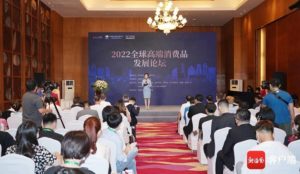
Our colleague, Lu Tianqin, Chief TV Host of Hinews.cn Media and Head of the Duty Free Channel at Hainan Hinews Media Co, introduces the Forum
CHINA. Hainan Hinews Media Co, the island province’s leading digital media company, yesterday hosted the Global High-end Consumer Goods Development Forum, a key supporting activity to the second China International Consumer Products Expo (Hainan Expo), which is taking place this week from 26 to 30 July.
Hainan Hinews Media Co is The Moodie Davitt Report’s strategic partner in Hainan. Its coverage of the island’s offshore duty free industry (including through a dedicated duty free TV channel) reaches a vast audience in Hainan and across Mainland China.
The Moodie Davitt Report Founder & Chairman Martin Moodie delivered a keynote address at the Forum. Here is an edited version.
大家好!Da jia hao!
Greetings everyone and I hope you all have a fantastic week at the China International Consumer Products Expo in Haikou.
I am so sorry I cannot be with you this year but family commitments back in the UK have meant that my next visit to beautiful Hainan will have to wait. Not too long I hope!
Nevertheless, I am with you in spirit and The Moodie Davitt Report is delighted to support this important Forum, which forms a key part of the Expo.
It’s my pleasure to take part in this great initiative from the Hainan Hinews Media Co, whose amazingly professional team I work with very closely. They provide us with unrivalled local coverage including on-location reporting which I in turn can share through my media platform with the world’s most famous brands. It is a unique and very important collaboration between a local media and an international one.
Their unrivalled coverage of the Hainan offshore duty free sector is crucial in building awareness of and credibility for the business in the eyes of consumers and the world’s leading brands. Hainan Hinews even hosts the world’s only TV channel solely dedicated to the duty free industry – and their coverage of store openings, promotional campaigns and brand launches is second to none, I can promise you.
I have been covering this industry globally for 35 years and I have never seen such an exciting dynamic as the Hainan offshore duty free sector. It was the principle reason that I moved to Hong Kong, China in 2020, so I could be close to the world’s hottest duty free market, and one which I called the ‘lighthouse’ of travel retail while the rest of the industry was plunged into darkness by the pandemic.
“President Xi has described international tourism as an important ‘business card’ for Hainan Free Trade Port. What a powerful business card it has become, one that has been shown to millions of Chinese visitors and many international tourists and businessmen since that small CDFG store opened in Sanya in 2011” – Martin Moodie
This week in association with KPMG China we published a White Paper that examines the Hainan duty free business in the context of the global duty free industry.
The White Paper underlines the significance and success of Hainan’s offshore duty free policy which I consider the most enlightened, consumer-friendly, and business-supporting policy in the history of the travel retail sector.
That policy, introduced in 2011 and enhanced in 2020, provides a wonderful role model of government/private sector collaboration and helps explain why Hainan has become the hot spot of the global duty free industry, an incredible achievement in just 11 years.
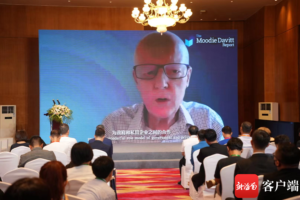
Martin Moodie: The various Hainan government support schemes are a rare example globally of government working hand in hand with duty free retailers to support a business that brings visitors, creates jobs and stimulates the wider economy – a far cry from the hostile approach to the duty free and travel retail industry of the UK government and the European Union authorities
The travel retail industry worldwide has gone through the most sustained and severe crisis in its history over the past two years. With passenger traffic collapsing at most of the world’s airports, travel retail was robbed of its bloodline through most of 2020 and to a lesser but still challenging extent in 2021. A global market that went into freefall with one remarkable regional exception, Hainan.
Thanks to some key health, strategic, policy and commercial decisions, China’s domestic travel retail industry has been the exception to the rule of industry malaise during the crisis.
Firstly the sustained success of the ‘dynamic zero Covid’ policy has been overwhelmingly successfully in curbing infections and limiting deaths. That has meant that domestic travel in China, albeit with sporadic restrictions, has blossomed through much of the pandemic era.
 That has been a major reason behind China Duty Free Group’s extraordinary rise to become the world’s number one travel retailer by sales since 2020 according to The Moodie Davit Report annual rankings. Consider that CDFG ranked just 19th in 2011 and you get an idea of the phenomenal impact of the offshore duty free policy introduced in that same year.
The impact of the enhanced duty free shopping policy introduced on July 1, 2020 was electric. Hainan’s duty free industry has become the superstar of travel retail, posting year-on-year sales increases of +127% and +84% respectively through 2020 and 2021 – in both cases from an all-time record high base and in both cases amid a global pandemic.
Hainan’s enhanced offshore duty free shopping generated a whopping CNY90.6 billion (US$13.55 billion) in sales over the two-year period after the policy was introduced. As I say, a triumph of policy.
Government support to boost the business didn’t stop there. Another key source of momentum came with the issuing of licences to several newcomers in 2020 in both the capital Haikou and the shopping heartland of Sanya to the south.
Again this year the Hainan government was proactive in its reaction as the island’s retailers were hit by the COVID-related slowdown in visitor numbers. Two key stimulus packages have been introduced over recent months to boost consumer consumption and assist the island’s duty free retailers.
The schemes are a rare example globally of government working hand in hand with duty free retailers to support a business that brings visitors, creates jobs and stimulates the wider Hainan economy – a far cry from the hostile approach to the duty free and travel retail industry of the UK government and the European Union authorities.

Hainan Hinews’ New Hainan app reports on Martin Moodie’s speech. Click on the image to view.
That support is further reflected in the hosting of the second annual China International Consumer Products Expo on July 26-30. The Expo will allow international exhibitors and visitors to gain a deeper understanding of Hainan’s Free Trade Port policy and create crucial business opportunities for Chinese and international companies.
Hainan offshore duty free is central to the Free Trade Port programme. It plays a dual role for brands – it is a big volume and value channel in its own right but it also offers an almost priceless showcase to consumers across the vast Chinese nation.
President Xi has described international tourism as an important ‘business card’ for Hainan Free Trade Port. What a powerful business card it has become, one that has been shown to millions of Chinese visitors and many international tourists and businessmen since that small CDFG store opened in Sanya in 2011. Who could have imagined back then that Hainan would become such a remarkable success story?
This conference will magnify that success story and I congratulate Hainan Hinews for having the vision to organise it. It has been my pleasure to take part.
谢谢你 Thank you.

Partner with us on WeChat and reach your key Chinese audience in Chinese. Stories related to the China travel retail market are featured each week on The Moodie Davitt Report’s WeChat Official Account. Please scan the QR code to follow us and contact Irene@MoodieDavittReport.com for native opportunities.
monkeybusinessimages / Getty Images/iStockphoto
Small businesses are an integral part of the American economy. According to the Small Business Administration’s (SBA) 2021 report, small businesses make up 99.9% of all American businesses. Every year, more and more sprout up as people develop new ideas and new ways of doing things. Whether it’s your local coffee shop or friendly, neighborhood bookstore, small businesses are everywhere.
Read: 8 Purchases Retirees Almost Always Regret
Also: How Rich Is Former President Donald Trump?
There are a number of reasons why shoppers love a small business. Not only are they able to provide unique products and services, but they also tend to have more sustainable business practices. But what is it that makes Americans choose a small business over the number of big box stores on every corner? A recent GOBankingRates survey found the top 3 reasons why people prefer to shop locally.
The best small businesses understand that their relationship to their customers is priority one, and it seems that shoppers really value that relationship as well. According to the survey, 53% of Americans enjoy the personal relationships they have with local businesses.
Business owners are looking for repeat customers to generate profit, and the best way to achieve that is to engage with them. These interactions can provide a lot of important feedback like whether the homepage is easy to navigate or whether the store’s organization is a little confusing. Small business owners are better able to engage with their customers and can therefore provide a more customer-forward shopping experience. And because these businesses are tied to the community, they understand what it needs.
Take Our Poll: Do You Tip for Service?
A strong personal relationship would be nothing without customer service, and the majority of Americans agree. 54% of survey respondents said that they shopped small because of the customer service.
Big corporations aren’t well known for their customer service. When something goes wrong, they can make it hard to feel heard. Much of their problem-solving involves a call center employee repeating the standard operating procedures and explaining that there’s nothing they can do.
When you’re dealing with a local shop, you know that when you call or visit, you’ll be dealing with someone who cares about their business and their customers. And smart business owners strive to take care of their customers so that they come back.
It’s a lot easier to put money towards something that matters to you, like a friend’s Etsy store or your neighbor’s lawn care service, because you can see the impact on a more personal level. Our survey found that 64% of people shop locally in order to support their communities. And small businesses can make a big difference.
According to the same SBA report, small businesses create 1.5 million jobs for Americans, which makes up 64% of all new jobs. And when the economy is staring down a bear market, job creation is something to be excited about. These businesses contribute to the local economy, and the property taxes tend to help the larger community as well.
More From GOBankingRates
By Yaroslav Lukov for BBC
Almost one million people in a suburb of Wuhan – China’s central city where the coronavirus was first recorded – have been placed under lockdown.
Photo: AFP
Jiangxia district residents have been ordered to stay inside their homes or compounds for three days after four asymptomatic Covid cases were detected.
China follows a “zero Covid” strategy, including mass testing, strict isolation rules and local lockdowns.
This has resulted in far fewer deaths than in many other countries.
But the strategy is facing growing opposition as people and businesses continue to face the strain of restrictions.
In Wuhan, a city of 12 million people, regular testing uncovered two asymptomatic cases two days ago.
Two more cases were found through contact tracing, and shortly after the lockdown order was issued.
Wuhan became known around the world in early 2020 as the first place scientists detected the new coronavirus – and the first city to be put under harsh restrictive measures.
At the time, the wider world was shocked by the strict lockdown, but many cities and countries were soon forced to impose their own similar measures.
Later, China became known as a Covid success story, with restrictions lifted much earlier than in many other countries.
But that has changed again, with China pursuing a “zero Covid” strategy resulting in frequent local lockdowns, rather than trying to live with the virus as in most other countries.
Last month, Shanghai – China’s giant financial capital with nearly 25 million residents – finally emerged from a strict two-month lockdown, though residents are adapting to a “new normal” of frequent mass testing.
A rising number of Chinese companies and factory production lines are maintaining a closed-loop system in order to follow the goal of completely eliminating Covid.
In order to keep parts of the economy open, employees have been told to live temporarily in their workplaces to minimise contact between work and home.
Earlier this week, scientists said there was “compelling evidence” that Wuhan’s Huanan seafood and wildlife market was at the centre of the Covid outbreak.
Two peer-reviewed studies re-examined information from the initial outbreak in the city.
One of the studies shows that the earliest known cases were clustered around that market. The other uses genetic information to track the timing of the outbreak.
It suggests there were two variants introduced into humans in November or early December 2019.
Together, the researchers said this evidence suggests that the virus was present in live mammals that were sold at Huanan market in late 2019.
They said it was transmitted to people who were working or shopping there in two separate “spill-over events”, where a human contracted the virus from an animal.
One of the researchers involved, virologist Prof David Robertson from the University of Glasgow, told BBC News that he hoped the studies would “correct the false record that the virus came from a lab”.
China has seen more than 2.2 million cases and 14,720 deaths since the pandemic began in 2019, according to America’s Johns Hopkins University.
– BBC